Projects and facilities
Projects led by A. Rastogi (PI)
OPUS-19
How warming and drier conditions affect photosynthetic efficiency, productivity, spectral properties and morphology of peatland vegetation in an in-situ climate manipulation experiment (Rzecin peatland).
OPUS-22 LAP
Effect of silicon on the spectral and physiological properties of buckwheat varieties under water-limited conditions.
NAWA Bekker
Radiative transfer models (RTMs) for interpreting remote sensing signals from peatlands under climate manipulation; research stay at the University of Twente.
EPPN2020
High-throughput phenotyping of buckwheat to identify drought-resistant varieties.
SAIA
Impact of industrial pollutants, including metal nanoparticles, on plant physiology and biochemistry.
Collaborations and networks
HEATRISE
FeRTN nanozymes as stress training for heatwave-resilient soybean. PI: Dr Shadma Afzal; A. Rastogi as co-investigator.
NAWA Ulam
Two NAWA Ulam fellowships hosted in the lab (Dr Shadma Afzal, Dr Bedabrata Saha), with A. Rastogi as host supervisor.
PANGEOS
European network linking plant phenotyping with Earth observation. A. Rastogi leads WG1 (field phenotyping) and represents Poland on the Management Committee.
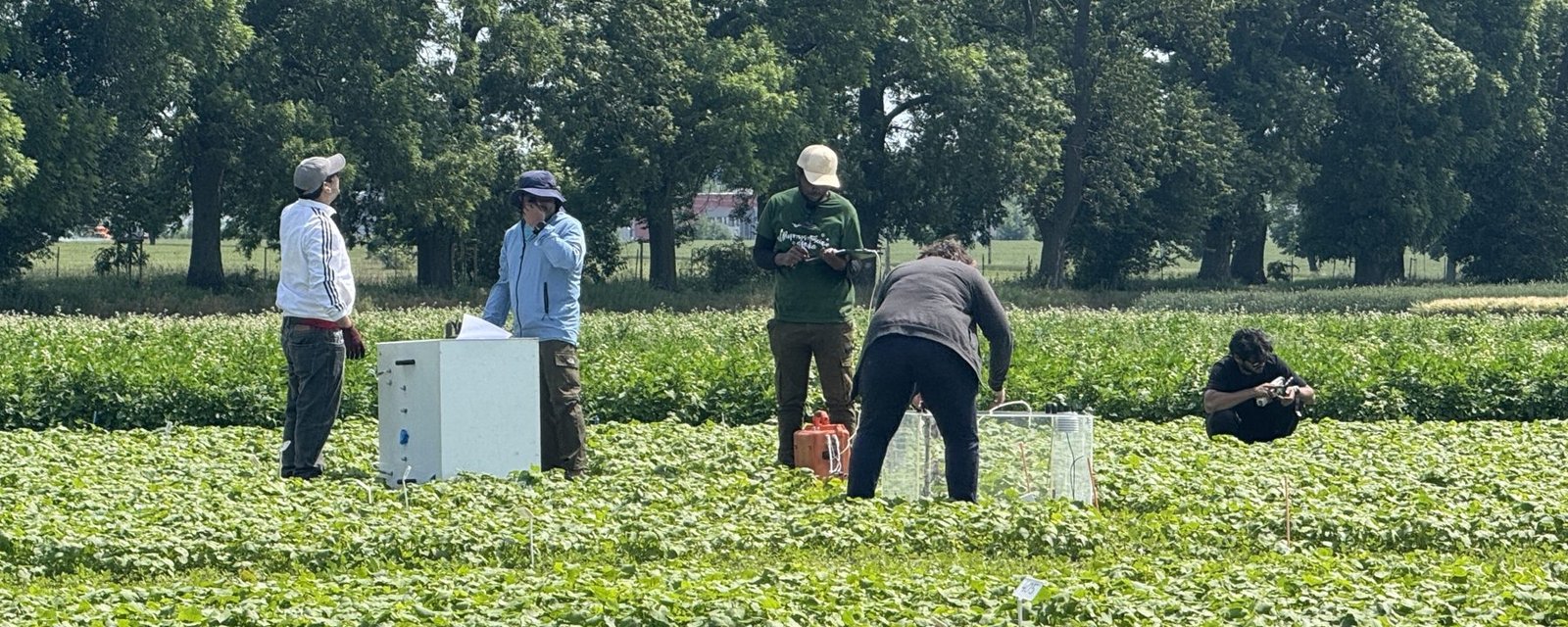
Instruments and field sites