From leaf to satellite
Our work spans four connected areas. The common thread is how plants split absorbed light energy between photosynthesis, heat dissipation and fluorescence, and how we can measure that in the field.
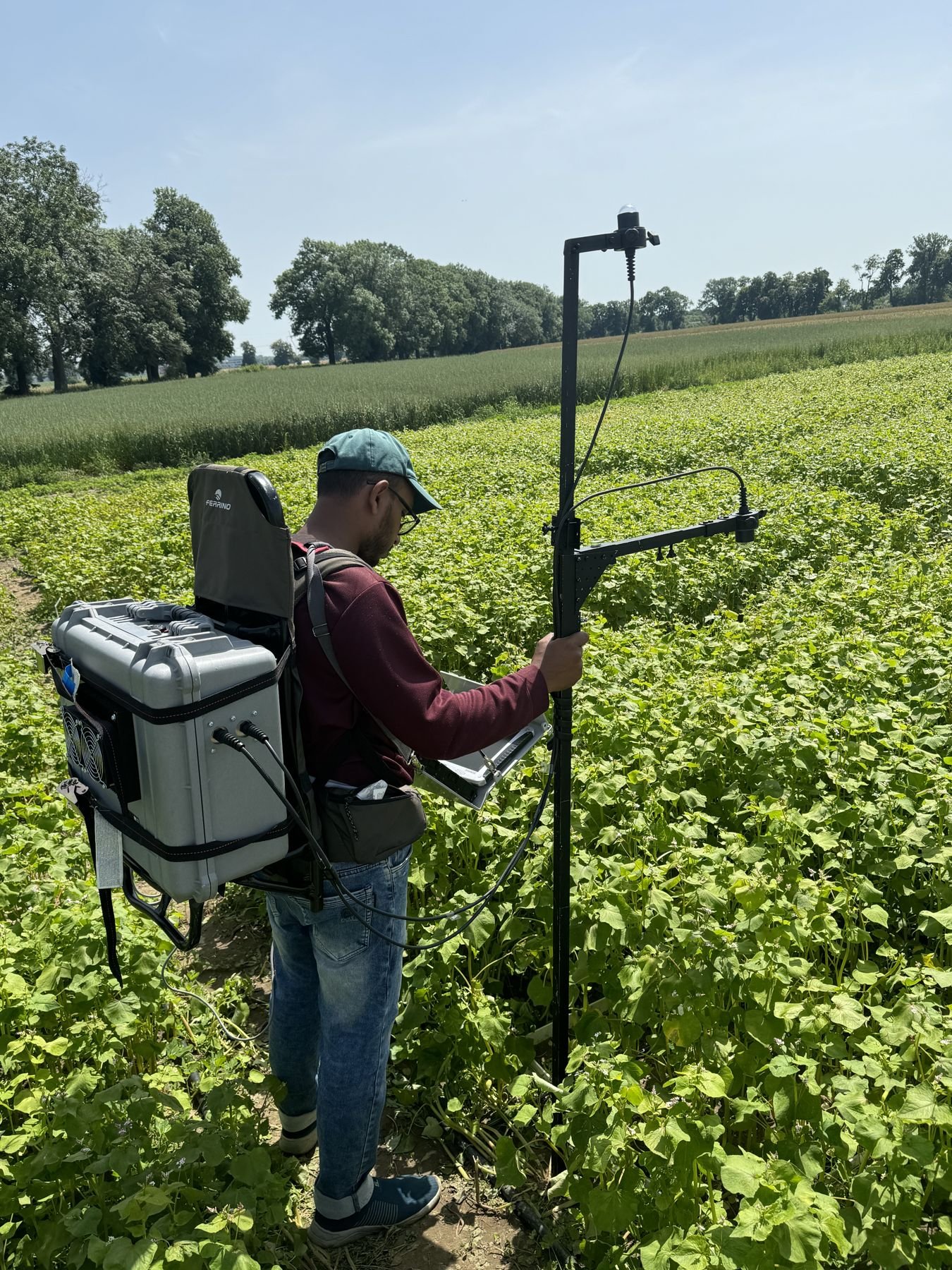
Sun-induced fluorescence (SIF)
We measure top-of-canopy SIF with field spectrometer systems such as Piccolo Doppio and pair it with gas-exchange data. Our question is when SIF really tracks photosynthesis (GPP) and when that link weakens, for example during heatwaves or drought.
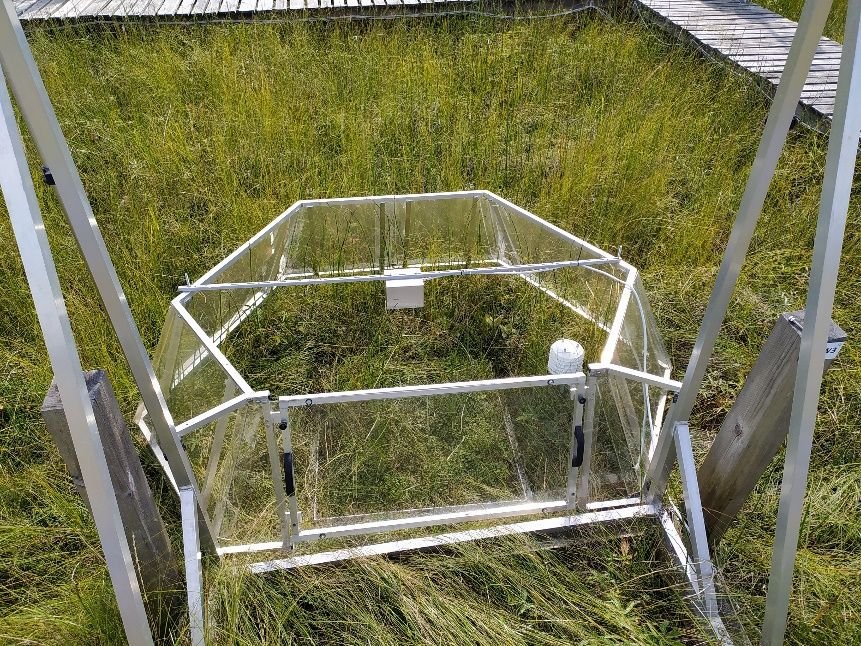
Peatlands in a changing climate
At the Rzecin peatland we run a warming and reduced-precipitation experiment. We study how water table, temperature and shifts in vegetation affect phenology, CO2 exchange and the spectral properties of Sphagnum mosses and vascular plants.
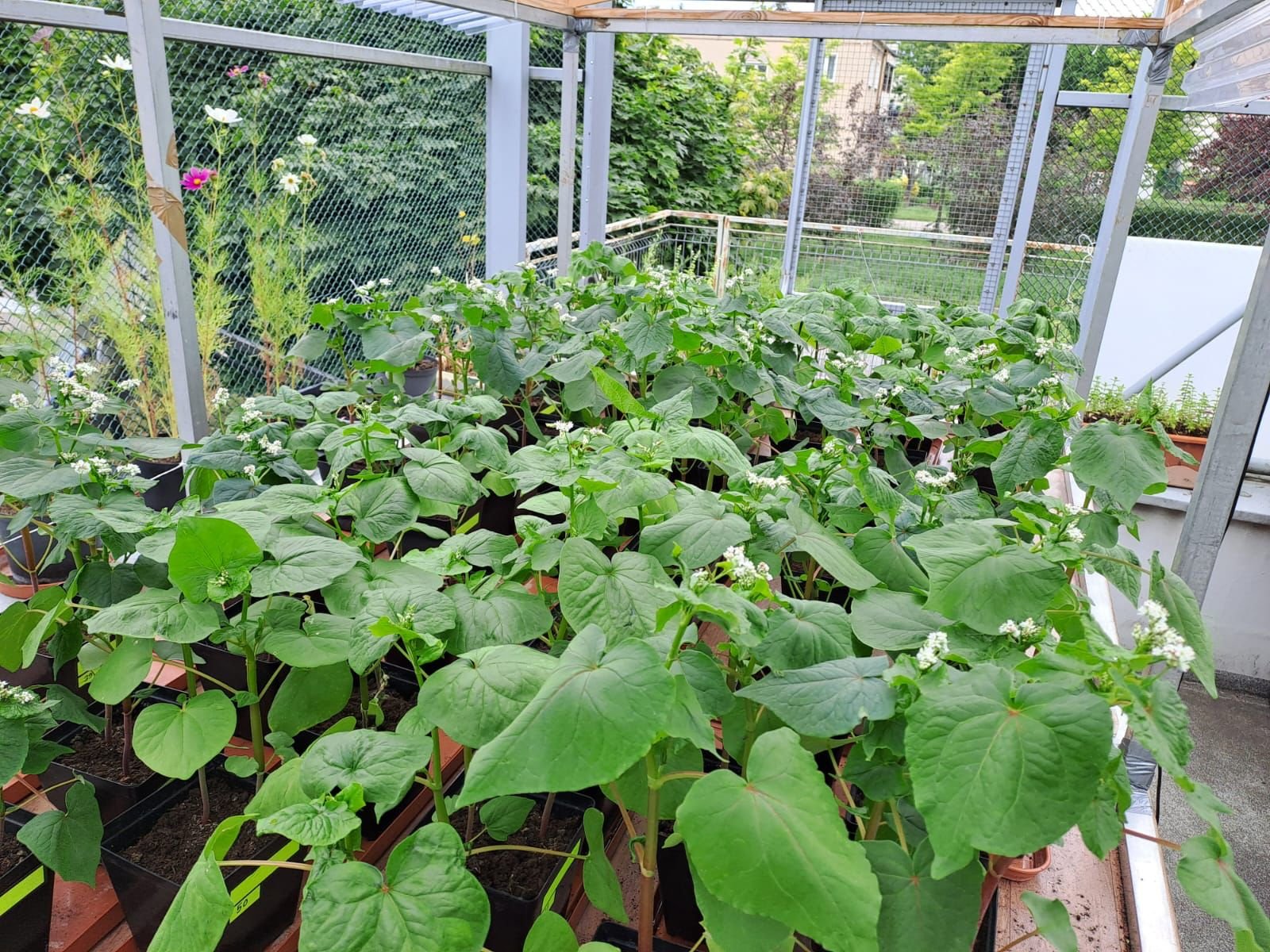
Crop stress physiology
We combine leaf-level measurements (chlorophyll fluorescence, OJIP, NPQ, gas exchange) with biochemistry to understand how buckwheat, soybean, maize and wheat respond to drought, heat, salinity and UV-B. We test silicon, nanoparticles and other biostimulants as ways to ease stress.
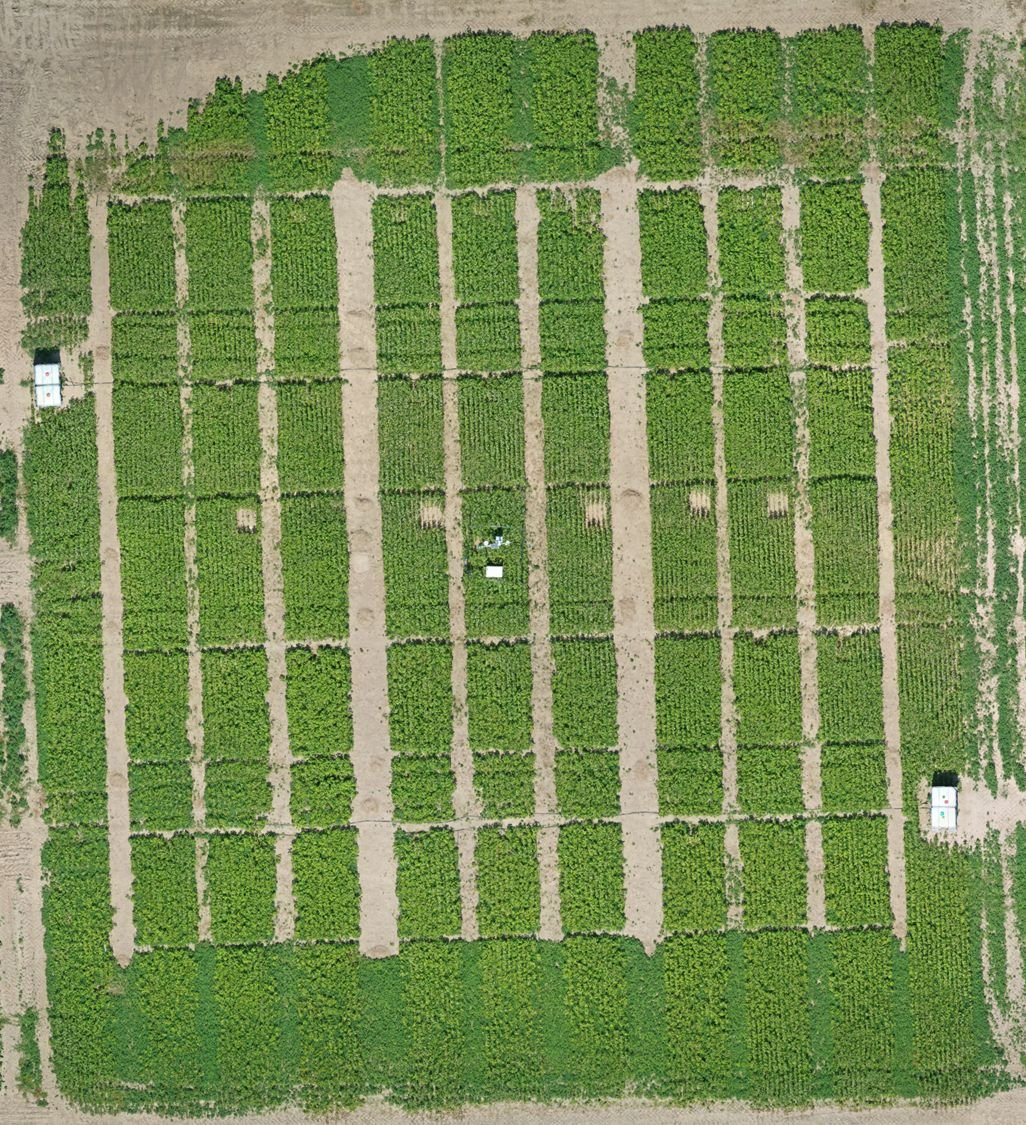
Phenotyping and AI
We develop high-throughput phenotyping methods, from handheld sensors to drones, and machine-learning models for early stress detection. We pay particular attention to whether models transfer across sites, seasons and sensors.